The biggest fault of Game theory is that it is biased towards instant utility and short-term rewards. It does not model for scenarios where reduced short-term rewards can lead to greater gains in the long-term.
In short, decisions made for singular benefit typically have worse long-term results than decisions accounting for collective benefit.


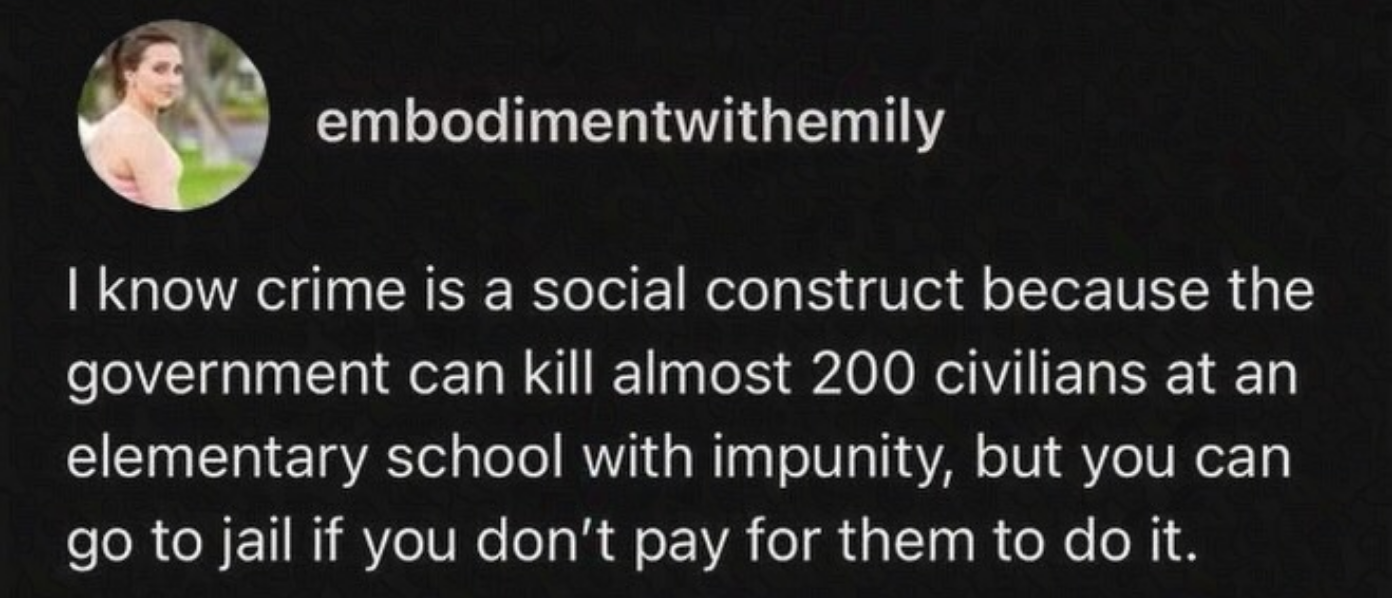
Of course, morality itself is a social construct, no? Even the foundation itself is shaky.
Morality is not a social construct, it’s part and parcel of the social contract.
And the social contract is some divine thing, or what?
It’s not, nor is it fixed.
Depends? Morality like “don’t steal” is partially a consequence of game theory. Game theory is math.
Is math a social construct - obviously not completely.
The biggest fault of Game theory is that it is biased towards instant utility and short-term rewards. It does not model for scenarios where reduced short-term rewards can lead to greater gains in the long-term.
In short, decisions made for singular benefit typically have worse long-term results than decisions accounting for collective benefit.
That’s a failure of that specific model. It just needs more creative mathematicians/theorists
Game theory does model for that. For example an iterated prisoner’s dilemma.