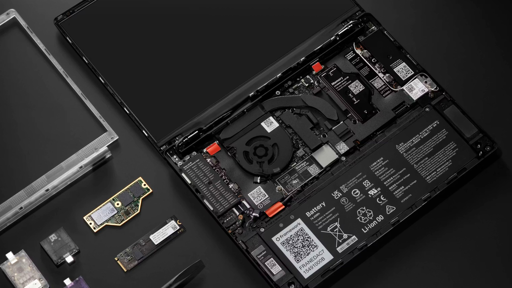
And they say Microslop only does bad things lately. What do you call more people switching to Linux to avoid their enshitification, if not a good thing?
It’s like Trump “helping” the oil industry
Not surprising, the venn diagram of people who would buy a Framework (or even know it exists) and people who would choose an open source OS (or even know they exist) overlaps quite a bit, I imagine.
Framework computers aren’t really targeted at the average consumer.
It makes sense that the kind of people who value hardware which they can easily and freely maintain and upgrade also value software which they can easily and freely maintain and upgrade.
For sure Linux being a free option vs Windows being a paid for one also helps.
Tbh the shocker for me was people buying Framework laptops with Windows on them at all…? Wut?
Though one would expect such technically inclined users to install the OS themselves. When I bought my 16 I bought “no OS” because while Fedora (which I knew would be installed) was an option I wanted FDE and so I chose to install it myself. It’s possible many of these were first time linux users who wanted the savings but also the ease of buying with a pre-installed OS.
I wonder how many would just do it for the extra discount and then use massgrave
Edit:
I went to watch their prices for the diy series
- Win 11 home is +145€
- Win 11 pro is +259€
- Ubuntu is free
(Preinstalled, is +220 € for win 11 pro or free Ubuntu, can’t get win home edition if preinstalled)
Even if you want Windows, it’s still better to get that edition that works just the same but has most of the bloat cut off, that they made for small business computers.
Who knows. Their target group is usually perfectly capable of installing an OS themselves. But Framework is also a popular hardware brand among Linux users, because their hardware is already built with Linux in mind. If you look at their forum, it does not feel like everyone is just installing Windows on their hardware.
windows is extra no?
Company when marketing works

Another sign its The Year Of Linux. Yes I said it. Someone had to!
Desktop Linux is seeing higher and higher market share, not just because Linux is growing but also because the desktop mode of computing is shrinking, especially for personal use. There are lots of people who used to own laptops/desktops but don’t anymore.
Yeah. This is something I’ve been trying to explain for a while. Between the Steam Deck and the declining overall market share of PCs, there’s a huge jump in Linux as far as percentage of users goes, but it isn’t actually making significant waves in general usage. Regular users are sticking with Windows and Mac, but now there’s 1 Windows or Mac laptop in a household shared by everyone now versus multiple laptops and a desktop a few hardware cycles back.
There are still a lot of Chromebooks kicking around, too. And those are technically Linux.
Year of the Linux PC, it’s just us left, everyone else is using the ID and facial scan parts of the internet.
Well help people switch over to Linux and to use Windows 10 debloated of they really need it too
Can it also be the summer of George? Lol
I recently bought a used alienware x14 r1 from a co-worker but if I hadn’t I would have picked up one of these if I knew about the company. The configurability (and upgradability) is very appealing to me.
One of these will be my next laptop I think.
does not surprise me. Framework appeals to users, who love DIY. The same applies for Linux.
If you‘re not into Linux/DIY, MacBook gives you a much better offering for the same price. If you‘re a masochist wanting Windows, you simply have smooth other options for lower price.
I’d like to also point out that MacOS has a hypervisor support framework built in so it can virtualize Linux built for ARM (aarch64 or arm64) very well on the Apple Silicon variants and also x86 on the Intel ones.
You can set that up yourself or use something like utm, which makes it easier. UTM also lets you set up hypervisors that can run Linux built for different architectures. Of course you can also rock Asahi on Apple Silicon hardware and blah blah blah.
But also for the non-DIYers or those who cannot abide Apple anything but want Linux there are alternatives (feel free to add to this of course):
If you like to DIY why are you using a framework instead of a briefcase PC?
Honestly I’m surprised they ever didn’t have a Linux first stance. Its literally the perfect fucking user base for em.
They always were Linux-friendly. Some hardware choices like the fingerprint reader were directly related to Linux compatibility. Firmware and UEFI updates have always been available on Linux. They sponsor a lot of FOSS projects (some of them unfortunately linked to nazi dipshits, stirring a lot of controversy, but 99% of them are clean).
They may not have explicitely advertised Linux before, but they dropped a lot of hints.
When they started out, Linux had a lot less mindshare than it has now. Also Microsoft will absolutely retaliate against you, if you promote anything but their crapware. For a small manufacturer that can be a problem.
They’ve always designed around ensuring good Linux support with their component choices and support of fwupd, but their marketing focused on being repairable and upgradable, unlike companies like System76, who explicitly sell their laptops as Linux laptops. It seems they’ve recently started advertising their Linux support more, possibly due to their partnership to have Ubuntu pre-installed, possibly due to seeing just how many Linux users they already had or possibly due to the number of people switching from Windows to Linux.
This includes people that install windows with their own license.
Paying the full 259€ for Windows Pro is just kinda ridiculous, when you can get keys for 30€ from resellers or just for free.
Yet many people do pay the 145 EUR for Win 11 home in other PC products, not reading the fine print in the few alternative cases where one actually get the option to not get Windows pre-installed. Yes, I know that large producers can get much cheaper licenses, but that doesn’t mean that they don’t charge you big for it anyway, either openly or just hidden in the final price.
A lot of people who are aware of Framework are linux users, and the average non-techie user probably doesn’t even know they exist.
Also:
Framework calls the Laptop 13 Pro “A laptop for Linux” in its official marketing, adding that it “is designed and tested for Linux compatibility from the ground up”.
If you market your product to linux users, surely you will attract a lot of linux users.
Just let good news be good news brother. We need more of it in the world right now.
i had a whinge in the comment section of a recent ArsTechnica article where they reviewed a bunch of Laptops and not one from Framework or Tuxedo haha
I have my eye on a Framework Pro 13 but really don’t need it, i mostly desktop. I don’t Laptop much and just use an old MS Surgace Pro7+ with LMDE installed.
Ars is weirdly pro-windows sometimes , in the comments. I don’t read them as much as I used to.
Wow, I was surprised that their release video leaned so much into Linux. They said that this is a response to user feedback. That reminded me of when there was a lot of ask for one-handable phone but their sales were too small. So glad to see it has paid off for framework.
CEO said “it is MacBook for Linux”
Hopefully they keep the repairability, unlike Apple.
It’s built with a lot of off the shelf components and the schematics for the parts that aren’t are open source. So even if they stopped tomorrow, the stuff they’ve already sold will always be repairable.
I bought a Pixel Fold because when closed it’s a one handed device. I mostly use the inner screen when traveling so I don’t need to bring a tablet
Pressures change when you are still niche. Apple and Google sell devices to show ads. Bigger screens, more ads.
Linux is legit pretty easy now comparable to Windows. It’s application preferences and familiarity that keeps people at bay. New to computer user, I don’t think they’d struggle anymore with a gnome or kde linux desktop than with windows. to do the regular stuff people do. Browse the internet. Save their photos/documents in some folders
I would guess literally 99% of people could switch to Linux Mint and be more than happy.
Eh, don’t know about that. Probably a very large portion of people would need word/PowerPoint/etc… For company document compatibility.
For sure a lot of people though could easily get by with LibreOffice.
MS Office works in a browser, and LibreOffice opens Word/Powerpoint files just fine. Been using LibreOffice for years while my coworkers send me files made with MS Office. It’s simply not a blocker.
Not anymore. Most corporate environments I’ve been in use Office on the web or Google Docs.
I installed Cinnamon the other day, because I remembered it to be easy to use. It is.
But. It looks dated to me. Could really use a facelift. Maybe it’s just me, but in light of modern user interfaces Cinnamon is functional, but not a looker anymore. Zorin OS and Gnome in general, for example, show how it can be done.
Maybe just me…
No, it’s not just you. Mint and Ubuntu get thrown around a lot by people recommending them to new users, and they’re fine, but they are a bit dated.
i quite like the cinnamon theme in mint, I think it looks really nice, especially with a vibrant wallpaper. In my opinion it’s modern but simple and relaxing to look at
I usually push new users to KDE Plasma if they are most used to Windows. It helps that Plasma is also my preference and I know how to help them with it, but yeah. I think it’s most likely to make intuitive sense to Windows users.
The grapuh of Linux suitability as a function of user skill is a U. At the bottom of user skill, you’ve got your aunt who needs a Chrome bootloader. Linux is perfect for them, maybe better than Windows.
As you get into the middle, you get into “I just need to use Photoshop” or “I just want to play Valorant”. It’s gotten to where software that doesn’t run on Linux is a deliberate choice, but they’re still out there. Gaming has been easing up in large part due to Valve, so the middle of the U has been rising, but it’s still a big dip.
At the top end you’ve got the computer science types developing all these internet and AI based systems almost all of which run on Linux servers in the back end. Linux dominates literally every computing platform except desktops.
Gaming is better on Linux than Windows now. I said what I said.
If you don’t play some of the big multiplayer games, definitely.
And that’s an artificial limitation. The game would work fine if they didn’t go to extra effort to hamper it; so the technical hurdles have been overcome.
It’s been so long that I’ve gamed on Windows that I’ll have to take your word for it.
At the bottom of user skill, you’ve got your aunt who needs a Chrome bootloader. Linux is perfect for them, maybe better than Windows.
My school system had thin clients running CentOS growing up and nobody had issues.
Very good analogy, only would say there’s a wide range of creative people who are stuck with windows/mac because of compatibility in their field. They can be quite highly skilled but you can’t escape the industry standards.
Luckily Adobe seems hell-bent on self-destructing, that should help.
Oh yeah, it does help indeed. After I got used to Gimp, I don’t think I’d ever want to open Photoshop. For my personal tasks that’s 100%.
I got so used to PS UI I can’t figure out Gimp. That’s why I use Krita
Have you tried this?
https://photogimp.com/
Maybe because it’s cheaper? You don’t need to pay for Windows license so it’s usually cheaper.
True, but don’t they also sell a no os edition?
Not anymore. Ubuntu replaced the no OS option.
Also curiously the only Windows option is Pro. Before you had Home or Pro.
Not anymore. Ubuntu replaced the no OS option.

It’s only Windows and None, they’ve replaced the pre-installed Ubuntu with an installation guide.
From FAQ:
You can choose the operating system that best fits your needs, Windows 11 and Linux are both supported. For Linux, Ubuntu and Fedora are officially supported with installation guides, and the Framework Community offers additional setup guides for many other distributions; other operating systems like OpenBSD may also work but are community-supported.
Not quite, no. Their DIY edition displays the options as you show, but if you select prebuilt then the options include Ubuntu.
I assume with DIY they offer Windows only as a quick way to acquire a license, it may not even be installed. Not sure if anyone can confirm if they just throw in a Windows USB.


Because no one anywhere should be using Windows Home for anything. It is bad enough with group policy I shudder to think without.
as a framework customer and a linux user im not a fan of that move. plenty of us want nothing to do with unbuntu
if you’re someone who cares enough to not like ubuntu you know how to install another distro, this is for whoever who chooses linux because yes
When I was looking for laptops regular laptops came out cheaper. I couldn’t justify the cost of a framework at the time.
Yeah, they’re not the cheapest but that’s because of their goals.
Designing with reparability and upgradeability in mind means more bespoke parts which cost more versus existing component assemblies in the market. That means more costly tooling and development, with smaller production runs than say a company like HP or Dell (which also costs more).
They actually sell the components and parts at reasonable pricing, and more importantly… designed with end user repairs in mind. So instead of everything being soldered to the main oard, different components are on separate subboards that can be replaced or upgraded separately. And include easy repair guides, a screwdriver in the box, and even extra screws pre installed in the chassis when you inevitably lose one.
Where possible, newer hardware they release can still be used on older models. Sometimes working 100%, sometimes with some limited capability depending on older system limitations. For instance, they just updated the 16" model and added an RTX 5070 GPU option, which you can purchase separately and pop into your old Framework 16 without needing to get a whole new system. Likewise, the same with the new mainboard/CPU in your old chassis. Or the new Laptop 13 2.8K Touchscreen which can be installed in every previous Laptop 13 model other than the Chromebook.
Very few laptop manufacturers get close to that kind of repairability and upgradeability, and that does come with a cost.
I’m so happy Framework appears to be doing well.
I’ve already replaced the keyboard of my 5yo OG 13 and plan to Frankenstein this thing as long as I can. I secretly hope the mainboard fails so I’m forced to upgrade.
Maybe after RAM prices recover…